


It was a Monday morning when a small fashion brand based in Austin noticed something unsettling. Their weekend conversion rate had dropped. Traffic was fine. Ads were running. But customers were abandoning carts at an unusual rate.
A quick check across three competitor Shopify stores revealed the culprit: two of them had quietly dropped hoodie prices from $55 to $39 over Saturday night, a 29% flash discount timed perfectly for weekend traffic. By the time the Austin team discovered it on Monday morning, they had already lost two days of peak conversions.
This isn’t a rare story. It’s happening every weekend, across every product category, in every corner of e-commerce. And for most brands, it’s completely invisible.
Why Shopify Pricing Is Harder to Track Than You Think
Shopify powers millions of online stores across fashion, beauty, electronics, and lifestyle. Unlike traditional retail, where price changes follow predictable cycles, Shopify stores update pricing constantly, sometimes multiple times a day during key shopping periods.
The competitive pricing landscape isn’t just dynamic. It’s designed to be difficult to follow manually. Consider what a typical pricing gap looks like across even three competitors in the same niche:
| Brand | Product | Regular Price | Sale Price | Positioning |
|---|---|---|---|---|
| Brand A | Running Shoes | $59 | $59 | Mid-market |
| Brand B | Running Shoes | $64 | $64 | Premium positioning |
| Brand C | Running Shoes | $59 | $52 | Aggressive on price |
That snapshot tells a useful story. But it’s frozen in time. By tomorrow, Brand C might have dropped to $44 for a flash sale. Brand B might have added a bundle. Brand A might have quietly raised its price to $69. Without a system that watches these changes continuously, your pricing strategy is always running on stale data.
The Seasonality You Can’t Afford to Miss
Discount patterns on Shopify aren’t random. They follow predictable seasonal rhythms, but only if you’re watching closely enough to see them emerge over time.
| New Year | Mid-Year | Black Friday |
|---|---|---|
| 10–15% avg. discount | 5–10% avg. discount | 20–40% avg. discount |
November is consistently the most aggressive pricing month across Shopify stores. But here’s the insight most brands miss: your competitors often begin testing discounted price points two to three weeks before Black Friday. By the time the official sales period hits, the most strategic competitors have already optimized their price architecture. If you’re only watching prices during the sale itself, you’re already behind.
Real Pricing Pattern
A Shopify footwear store tracked by Pline revealed a recurring 20% mid-month discount applied every third week, not during any official sale period. Their competitor had been quietly testing price elasticity for months, invisible to anyone not running automated tracking.
The Real Cost of Manual Monitoring
Let’s be direct about what manual competitor tracking actually looks like in practice. It means opening a spreadsheet, navigating to 10, 20, maybe 50 product URLs, copying and pasting prices, updating cells, and repeating this, every day, or every week, indefinitely. And even then, you’ll miss flash sales that last 48 hours.
Manual tracking works for a handful of products. It fails completely at scale, and it fails silently, you never know what you missed.
| Capability | Manual tracking | With Pline |
|---|---|---|
| Real- time price updates | ❌Missed | ✔️Captured automatically |
| Short-term flash sales | ❌Usually Missed | ✔️Every price change logged |
| Historical pricing data | ❌No record | ✔️Time-stamped dataset |
| Scales across 50+ products | ❌Not Practical | ✔️Automated at any scale |
| Requires technical skills | – | ✔️No code required |
| Data Accuracy | ❌Human Errors | ✔️Structured, clean output |
Where Pline Comes In: Turning Product Pages into Pricing Intelligence
Pline was built by the same team behind Grepsr, one of the most trusted names in enterprise web data extraction, with over 13 years of experience. That institutional knowledge is what makes Pline different from generic scraping tools: it’s not just software, it’s a platform that understands the complexities of real-world web data at scale.
Pline’s approach to competitor pricing monitoring is built around three core ideas: make it visual, make it repeatable, and make it secure.
What data can you extract from Shopify stores?
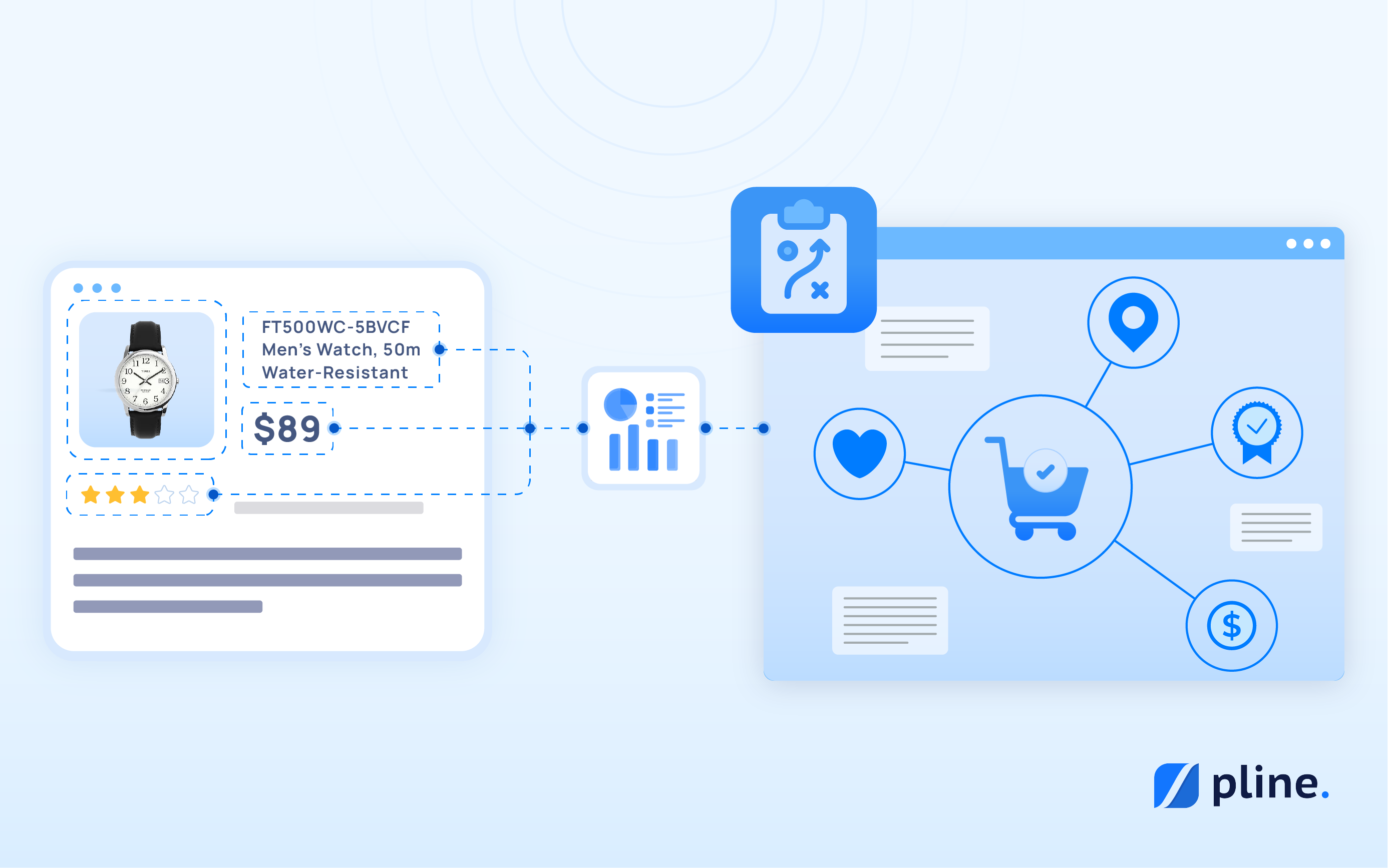
Product nameCurrent priceCompare-at priceDiscount percentageProduct URLVariant optionsAvailability statusCategory / tags
The output is automatically structured into clean, analysis-ready datasets. No reformatting. No cleaning. Just data you can act on immediately.
| Product | Current Price | Original Price | Discount | Availability |
|---|---|---|---|---|
| Oversized Hoodie | $39 | $55 | 29% off | In stock |
| Graphic Tee | $15 | $20 | 25% off | In stock |
| Running Shoes | $79 | $99 | 20% off | Limited |
| Winter Jacket | $120 | $120 | Full price | In stock |
How to Monitor Shopify Competitor Prices with Pline: Step-by-Step
Setting up a competitor pricing intelligence system with Pline doesn’t require a developer, a data team, or even a technical background. Here’s exactly how it works.
- Identify your competitor stores
Start by listing the Shopify stores that sell similar products or target the same customer base. Focus on direct competitors first, the brands whose pricing decisions genuinely affect your conversion rate.
- Build your pricing workflow in Pline
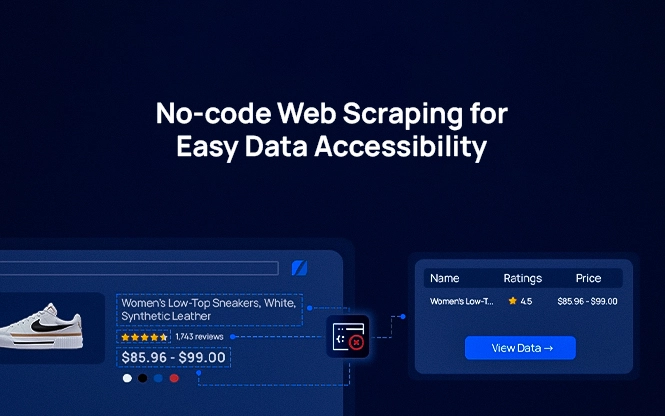
Using Pline’s visual no-code interface, simply navigate to a competitor’s product page and select the data fields you want to capture. No coding, no CSS selectors, no configuration files. Pline handles the structure automatically.
- Schedule automated monitoring
This is where Pline becomes genuinely powerful. Instead of running workflows manually, set a schedule, daily for fast-moving markets, weekly for broader monitoring, and monthly for long-term trend tracking. Pline runs silently in the background and updates your dataset every cycle.
- Analyze trends and act on insights
Export clean, structured data in CSV format and analyze price fluctuations over time. Identify discount patterns, promotion strategies, and category-level trends that would be impossible to spot from a single manual check.
Why Historical Data Is the Real Competitive Advantage
A single pricing snapshot tells you what’s happening today. A historical dataset tells you what’s about to happen because patterns repeat.
Here’s what a timeline of tracked pricing on a single product might reveal:
| Date | Product | Price | Status |
|---|---|---|---|
| Jan 1 | Running Shoes | $99 | Full price |
| Jan 10 | Running Shoes | $99 | Unchanged |
| Jan 15 | Running Shoes | $79 | Flash sale begins |
| Jan 18 | Running Shoes | $99 | Price restored |
Without automated tracking, the Jan 15–18 window is completely invisible. With Pline’s scheduled extraction, it becomes a data point in a growing historical record. Over months, you start seeing the full picture: every two weeks, this competitor runs a 3-day flash sale timed to weekend traffic. That’s actionable intelligence.
Enterprise-Grade Security — Because Your Data Matters
Pline’s Proof of Record™ feature gives every extracted data point a clear source lineage; you can always trace exactly where the data came from, who extracted it, and when. For pricing teams that need to defend decisions with evidence, this is invaluable.
And for brands handling sensitive competitive intelligence, Pline’s Zero-Knowledge Encryption means your data is encrypted from browser to storage. Not even Pline can access it, only you and your team.
Beyond Pricing: What Else You Can Do with Shopify Data
Once you’ve built a pricing workflow, the same infrastructure opens up broader competitive intelligence capabilities.
- Market research
Benchmark your pricing against the full competitive landscape. Identify price gaps, categories where you’re over-indexed, and opportunities where competitors are leaving room.
- Sales planning
Understand seasonal demand patterns before the season arrives. If three competitors historically slash prices on a specific product category in October, you can decide ahead of time whether to match, hold, or create a counter-strategy.
- Product strategy
Identify which categories are commoditized (constant price pressure) versus which remain premium (rare discounting). This informs both product development and margin management.
- Promotional intelligence
Track how frequently competitors run promotions, how deep the discounts go, and whether they’re increasing in frequency over time, a signal of margin pressure or excess inventory.
Frequently Asked Questions
Can Pline extract Shopify pricing data without any coding?
Yes. Pline uses a visual workflow builder that lets you point and click to select data directly from any web page. No code, no CSS selectors, no technical setup required.
What Shopify data fields can I collect?
Product names, current prices, compare-at prices, discount percentages, product URLs, variant details, availability status, categories, and more. Pline structures everything automatically.
Can I monitor competitor prices automatically on a schedule?
Yes. Pline’s scheduling feature lets you run workflows daily, weekly, or monthly, building a continuous historical dataset without any manual effort.
How does Pline handle data privacy?
Pline uses Zero-Knowledge Encryption; every record is encrypted from the moment it leaves your browser through to storage. Only you and your authorized team members can access the data. Not even Pline has visibility.
Why is historical pricing data more valuable than a single snapshot?
A single snapshot tells you the current state. A historical dataset reveals the patterns, flash sale cycles, seasonal discounting behavior, and long-term positioning shifts, that let you anticipate competitor moves rather than react to them.
Is Pline suitable for enterprise teams?
Yes. Pline is built for collaborative teams, multiple users can share workflows, divide extraction tasks, and work on datasets together. Enterprise plans with advanced features are available at pline.ai/enterprise.